Upper West Side Prewar vs. Newer Apartments
What is the real difference between prewar and newer apartments on the Upper West Side?
Prewar apartments on the Upper West Side typically offer higher ceilings, more distinct room separations, architectural details like moldings and hardwood floors, and a cooperative ownership structure with board approval. Newer buildings generally deliver open floor plans, updated mechanical systems, modern amenity packages, and condominium ownership with fewer restrictions. The gap between them is not just aesthetic, it runs through financing, renovation rules, monthly carrying costs, and resale dynamics.
Key Takeaways
- Recent local market data puts the Upper West Side median sale price at $1,225,000, with homes going to contract in a median of 20 days, a fast market where preparation matters before you tour.
- Lincoln Square, which sits within the Upper West Side and holds a significant share of the prewar cooperative stock, shows a median sale price of $988,000 and a median of 47 days on market, reflecting a more deliberate buying process tied in part to co-op board timelines.
- Prewar co-ops and newer condos are governed by fundamentally different ownership structures, co-op board approval, alteration agreements, and sublet restrictions do not apply the same way in a condo, and that distinction shapes everything from your renovation plans to your exit options.
- A renovated prewar apartment can have a fully contemporary kitchen and bathrooms while retaining original moldings and floors, treat "prewar" and "newer" as shorthand for a starting point, not a guarantee of what you will actually find inside.
- Before buying any prewar unit, review the building's financial statements, capital project history, and board minutes where available, the apartment finishes tell you less than the building's balance sheet does.
Every time I walk a buyer through an Upper West Side building for the first time, the conversation starts the same way: prewar or new? It feels like a style question. It is actually a financial and lifestyle question, and the answer is rarely obvious until you break it down properly.
The Upper West Side has one of the most varied housing stocks in Manhattan. You have century-old cooperatives with beamed ceilings and formal dining rooms sitting two blocks from glass-and-steel condos with concierge service and in-unit laundry. Both can be excellent purchases. Both can also be the wrong purchase for the wrong buyer. Here is how I think about the comparison.
How do prewar Upper West Side apartments compare to newer buildings on layout and character?
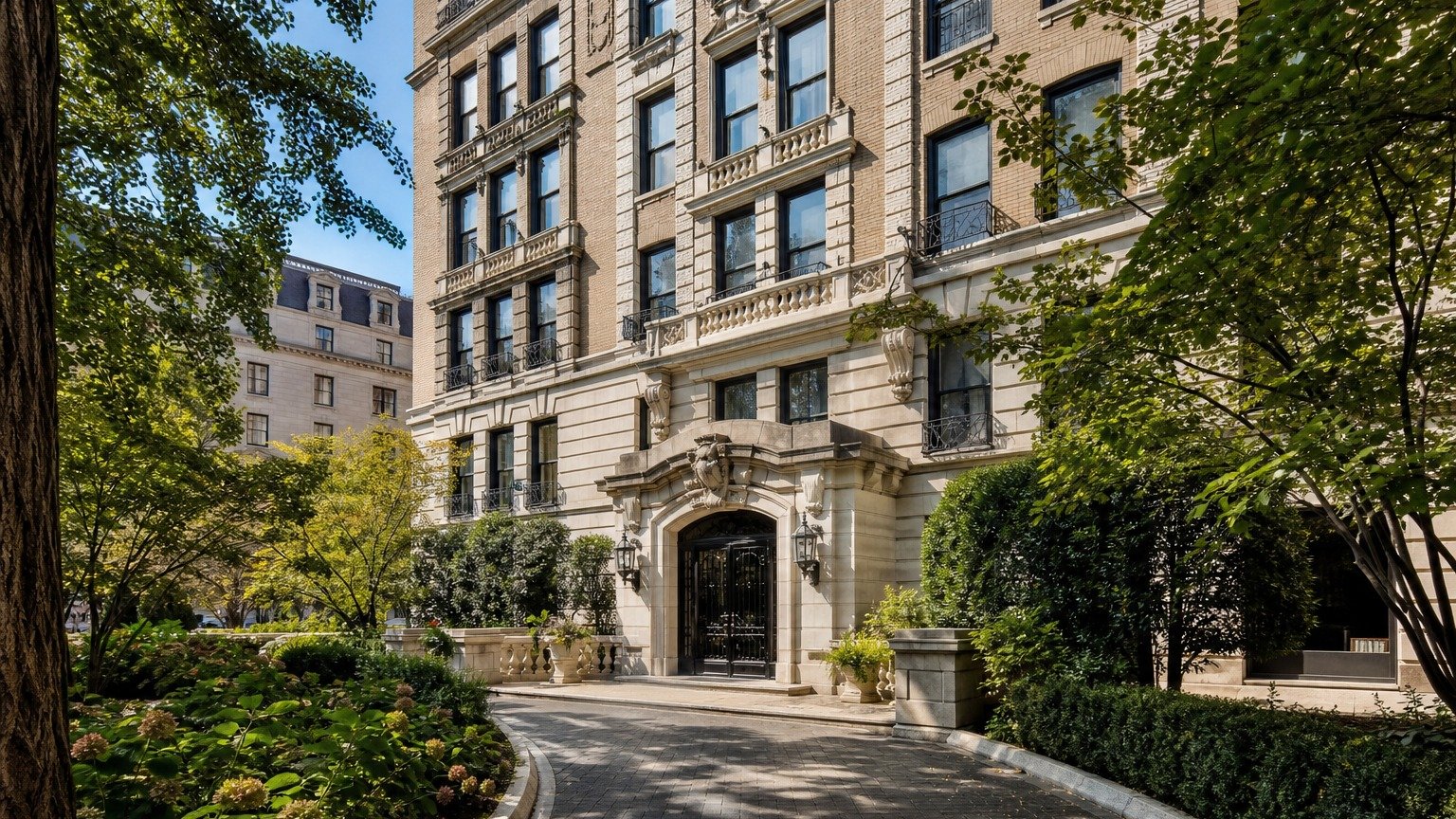
Prewar apartments, generally those built before World War II, were designed around a different idea of how people live. Rooms are distinct. There is an entry gallery. The kitchen is separated from the living area. Bedrooms are off a proper hallway. The classic six layout (living room, formal dining room, kitchen, two bedrooms, and a maid's room that functions as a third bedroom or office) is a product of this era, and it remains one of the most livable configurations in New York City.
A building like 116 West 72nd Street, a 1918 Italian Renaissance-style cooperative designed by Schwartz & Gross, illustrates what prewar construction actually means at the building level: 15 stories, 70 units, beamed ceilings, restored hardwood floors, a doorman, and a basement laundry room. Individual apartments vary between preserved and renovated condition, but the bones are consistent. That is the prewar proposition, strong architectural character, with condition that depends on how each owner has maintained and updated their unit over the decades.
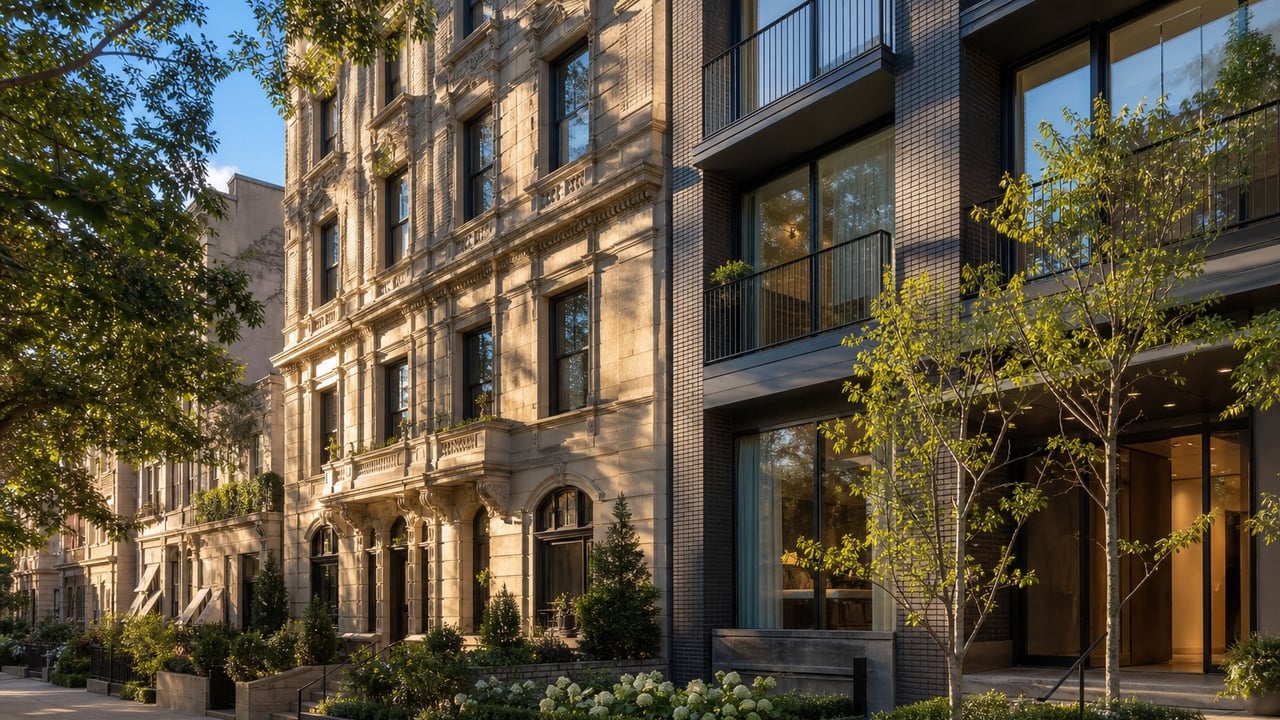
Newer buildings, particularly those built in the last 20 to 30 years, were designed around the open floor plan. The kitchen anchors the living area. Closets are larger and more efficiently placed. Primary baths are built to a contemporary standard from day one. The tradeoff is that the rooms feel less distinct, ceilings are often lower than a true prewar building, and the architectural detail that makes a prewar apartment feel substantial is largely absent.
Neither is wrong. But if you are comparing a renovated three-bedroom prewar co-op to a newer three-bedroom condo, you are not comparing the same spatial experience. I always tell buyers to visit both types before deciding, the difference in how a room feels is not something a floor plan communicates.
For a broader look at what newer construction is delivering right now, see the top-selling condos on the Upper West Side, and for what is coming to the area in terms of new development, the new development reshaping the UWS skyline is worth a read.
What does a classic six apartment mean in Lincoln Square?
A classic six is a prewar layout with six rooms: a living room, formal dining room, kitchen, two true bedrooms, and a sixth room, historically a maid's room, that most buyers today use as a third bedroom, home office, or nursery. The defining feature is room separation and privacy. Each room has a door. The kitchen is not open to the living area. It is a layout that works exceptionally well for people who want distinct spaces for work, entertaining, and sleeping, and it is one of the primary reasons buyers still pay a premium for well-maintained prewar stock on the Upper West Side.
Are prewar apartments better built than newer condos?
The honest answer is: it depends on what you mean by "better built." Prewar buildings used thick plaster walls, solid-wood floors, and masonry construction that delivers genuine soundproofing between units and a sense of permanence that newer drywall construction does not replicate. On the other hand, the underlying systems, electrical wiring, plumbing, heating, elevators, windows, in a prewar building are often original or have been updated piecemeal over decades. A newer building will have modern mechanical systems, current electrical standards, and building-wide infrastructure that does not require the same level of ongoing capital investment. The building's financial statements and capital project history will tell you more than the construction date alone.
What should buyers know about renovation, amenities, and carrying costs before choosing?
This is where the prewar versus newer comparison becomes a financial conversation, not just an aesthetic one.
Renovation rules in prewar Upper West Side co-ops
If you buy a prewar cooperative on the Upper West Side and want to renovate, you are not operating freely. Most co-op buildings require board approval for alterations, an alteration agreement, licensed contractors, specific insurance certificates, work-hour restrictions, and rules governing plumbing moves, electrical upgrades, flooring, and wet-over-dry changes. The NYC Department of Buildings permits are only part of the picture, the co-op board's alteration agreement is a separate layer of approval entirely.
That does not mean renovation is impossible. It means it requires planning, the right contractor relationships, and a realistic timeline. I have seen buyers purchase a prewar apartment specifically to gut-renovate it, and I have seen others walk away from a deal when they understood the approval process involved. Know which camp you are in before you make an offer.
In a newer condominium, you still need Department of Buildings permits for structural or plumbing work, but the ownership structure gives you more latitude. There is no co-op board weighing in on your kitchen layout.
Amenities: what "full service" actually means
Lincoln Square's prewar cooperative stock includes doorman elevator buildings with laundry facilities, and some buildings have added fitness rooms or storage over the years. But amenities vary substantially by building, and the monthly maintenance charge reflects whatever the building actually provides and maintains. A prewar building with a doorman, elevator, and laundry room is meaningfully different from a newer building with a 24-hour concierge, gym, roof deck, package room, and bike storage, and the carrying costs reflect that difference.
Newer condos tend to carry higher common charges because the amenity packages are more extensive and the buildings are newer enough that reserve funds are still being built. Prewar co-ops carry monthly maintenance that covers the underlying mortgage on the building (if one exists), property taxes, staff, and operating costs. The NYC Department of Finance handles the tax treatment of co-ops differently from condos, and the deductible portion of maintenance is something to verify with your tax advisor.
The right comparison is not just the asking price. It is the asking price plus the monthly carrying cost, plus your realistic renovation budget, plus the capital project exposure the building's financials reveal. That is the number that actually determines what you are buying.
In-unit laundry and soundproofing
Newer Lincoln Square buildings frequently include in-unit washer/dryer hookups or stacked units as a standard feature. Prewar buildings typically have shared laundry in the basement, and adding in-unit laundry often requires board approval and specific plumbing conditions that not every unit can accommodate. If in-unit laundry is a requirement for you, it is worth confirming at the building level before you fall in love with a prewar apartment.
On soundproofing: prewar plaster-and-masonry construction genuinely outperforms most newer drywall construction for sound transmission between units. That said, floor-to-ceiling sound, footsteps from above, is a separate issue in both building types and depends heavily on the specific unit, the floor construction, and what the neighbor above has done with their flooring. A professional inspection and a conversation with the building's managing agent will tell you more than a general rule will.